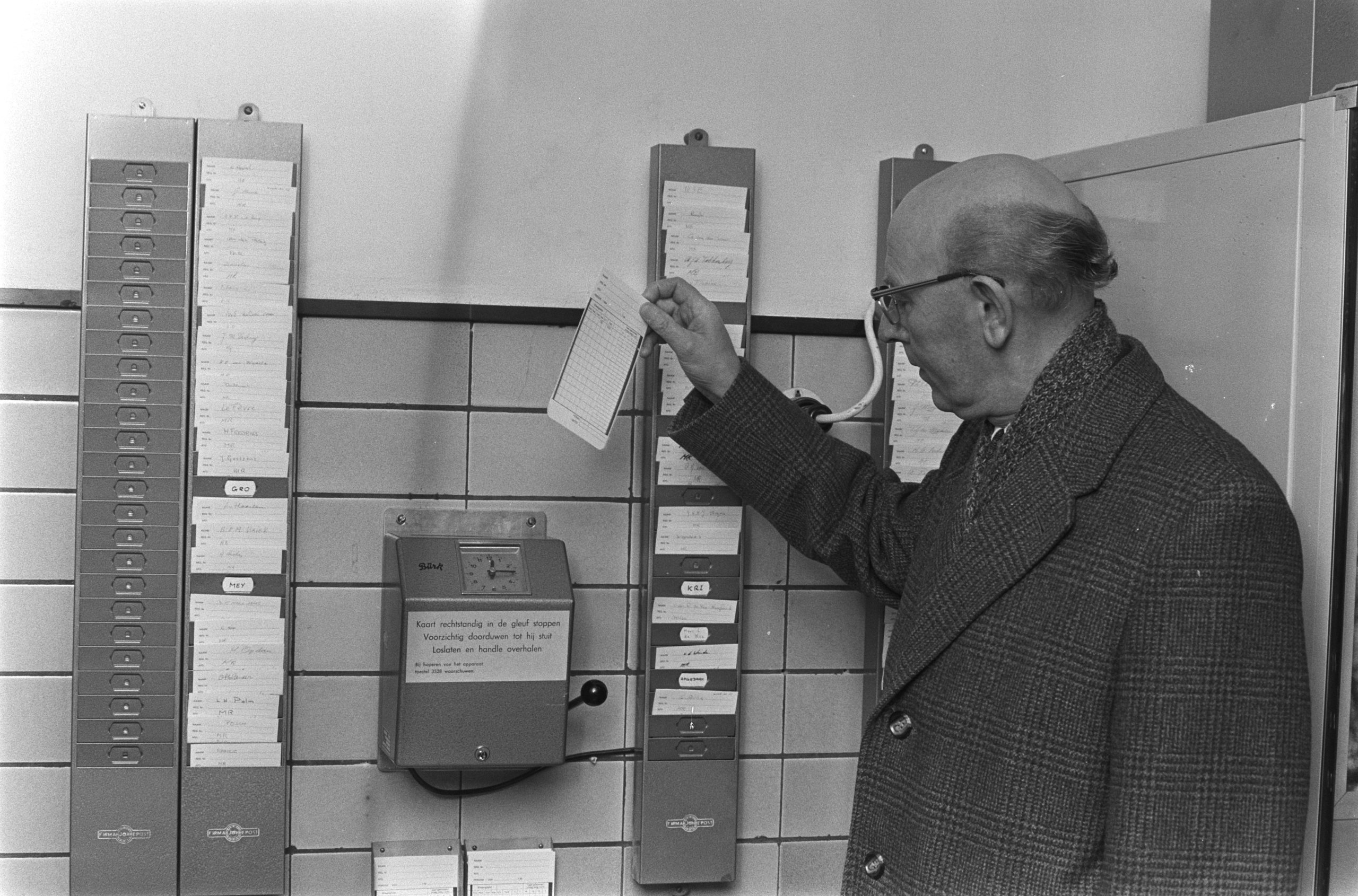
Time is valuable, particularly the time of managers. For this reason, many companies choose for a time clock system. A clock system automatically tracks employees’ working hours, enabling employers and managers to save time on time registration. There are many advantages associated with a time clock system, but also a few disadvantages that, if you’re not careful, can even result in fines.
Is Time Registration Mandatory?
The European Court of Justice ruled on 14 May 2019 that all companies operating in Europe must implement a system for registering employees’ working hours. In the Netherlands, the Working Hours Act has required employers to record their employees’ working hours for years. However, it is expected that following the ruling, the standards for a time registration system in the Netherlands will also be tightened. This is because the court has decided that such a system must be ‘objective, reliable and accessible’. One of the greatest advantages of a time clock system is that it meets all these criteria.
A Time Clock System Ensures Transparency
Naturally, it is important to always comply with the law. Better than avoiding fines is that a time clock system creates transparency towards the employee. Because hours are recorded objectively, the employee is assured that the registered hours are actually correct. For the employer, this means they in principle never have to engage in a lengthy discussion about the accuracy of registered hours. Thanks to the presence of the time clock system, the evidence is available in black and white and can always be reviewed.
Quick Clocking In and Out With…
For many people, a time clock system conjures up images of a wooden stamping device. Modern time clock systems have long since stopped using cardboard print cards. Employees can nowadays register their working hours in a quick, user-friendly manner using a pass, tag or fingerprint scan. Hours are then automatically registered, meaning employers never have to manually track worked hours again, which saves a great deal of valuable time. However, as an employer, be careful how you handle staff fingerprint scans. Recently, the Data Protection Authority issued the highest fine ever to a company because it processed employees’ fingerprint scans without staff having explicitly given consent for this. Under GDPR, employers may not require their staff to provide a fingerprint scan. Dyflexis advises companies to leave the choice between a fingerprint scan or the alternative of a pass or tag entirely to the employee. Therefore, don’t ask whether the employee wants to clock in with a fingerprint scan, but which clocking method they prefer.
Attendance Registration
In addition to registering the start and end times of shifts, time clock systems can also be used as a means of attendance registration. Employers and managers therefore always have visibility of which employees are present on the work floor. When, for example, an emergency occurs in a building, the data recorded by the clock system can immediately establish which staff members were all in the building that day. In this respect, a clock system contributes to good safety.
A Time Clock System as a Control Tool
There is much positive to say about time clock systems, but there are also a number of drawbacks. For instance, some employees view the time clock as a control tool of the boss. This can lead employers to question whether a time clock system is such a good idea. To those employers, the advice is: look at the situation from the other side! In recent years, the number of employees suffering from burnout has risen considerably. Precisely because a clock system clearly shows how many hours an employee works, the employer can better assess when an employee is at risk of becoming completely exhausted. The employer can take early action and let the employee know that, despite their hard work being valued, they must not forget to take sufficient rest. In that respect, a time clock also symbolises good employer practice.
Is Clocking In With Fingerprint Scan Still Current?
It was previously indicated that many time clock systems have a fingerprint scanner. The advantage of this is that employees can literally clock in in the blink of an eye. The disadvantage is that a fingerprint scan belongs to personal data and is therefore privacy-sensitive. This means that employers bear a higher responsibility for storing this information. To spare employers concerns and doubts about processing fingerprint scans, Dyflexis has developed the Rex-O-Matic NOA. With the Rex-O-Matic NOA, it is possible to have employees clock in using personal passes, for example an OV-chipcard or Dyflexis pass. An option that responds to the personal element whilst also safeguarding employees’ privacy. View the possibilities of the Rex-O-Matic NOA and discover what this time clock system can mean for your company.



