
Since March 1, 2025, the first CAO (collective labor agreement) for artisan bakeries has been introduced with retroactive effect. This creates challenges in administration, scheduling and payroll. Although this is a positive development for employees, it means extra work for you. Especially since these changes were introduced retroactively. But don't worry: with the right processes, you prevent errors and meet the CAO requirements.
What exactly changes in the new CAO?
These five changes directly affect staff scheduling and time tracking for artisan bakers:
Half-yearly hour calculation One of the most far-reaching changes in the new CAO is that overtime is now paid out every six months instead of monthly. The new overtime calculation runs from April 1 to September 30 and from October 1 to March 31.
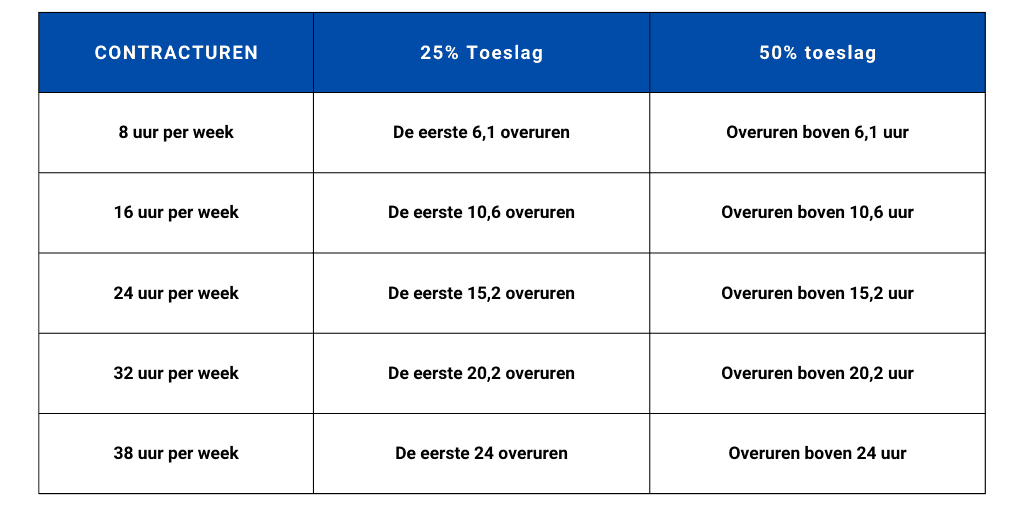
New allowance calculation The settlement of overtime changed as of March 1: when you work more hours than in your contract, overtime is accrued, with a 25% allowance for the first 24 hours and 50% above that. For part-timers, the allowance is calculated pro rata. Is someone scheduled for a shift with an allowance, but doesn't end up working it? Then they still get the allowance.
Allowance for part-timers Part-timers used to get an allowance only above the full-time limit; now they get an allowance when they work more hours than their contract.
Minus hours are the employer's risk. Does an employee work fewer hours than their contract hours? Then the employer is responsible, unless it's the employee's choice or responsibility. The hours don't have to be made up with vacation hours or other paid leave.
"A change in a CAO is a positive development, but it also brings challenges. In this case, many manual ones." – Bastiaan Schoonhoven, CCO
What are the consequences of these changes?
The changes in the CAO have far-reaching consequences for artisan bakeries. Without the right technology, they lead to an administrative burden for:
Complex calculations: The new calculation method for overtime and allowances makes the administrative process more complex. Half-yearly calculations, new percentages and employees' freedom to choose between time-for-time and money.
Preventing minus hours: Employees' minus hours don't have to be compensated with vacation hours. That's why it's important to schedule efficiently. When scheduling, make sure everyone reaches their contract hours.
Lower salary, bigger savings pot: Bakers who structurally work overtime are used to receiving their overtime and allowances every month. In the new CAO, these are saved up for six months and then paid out. As a result, bakers receive a lower salary each month. If they need this money to make ends meet, that's an unpleasant situation.
Contracts for part-timers: Because part-time employees are entitled to an overtime allowance calculated pro rata to their contract, it's important to take a close look at contracts. Part-time employees with small contracts in particular quickly reach the 50% allowance. That's why it's wise to check whether contract hours match the number of hours the employee works. The table below shows the limit for the 25% and 50% allowance per contract.
Coordinating with employees
Some employees who structurally work overtime weren't happy with the new CAO. Under the new CAO, they receive a lower salary each month, because overtime and allowances are saved up for six months before being paid out. That's why bakeries regularly find their own way to interpret the CAO to support employee satisfaction. "In consultation with employees, you can for example choose to pay out the overtime and only save up the allowances. To calculate this correctly, you need powerful software." – Bas Vugteveen, Consultant
The pitfall of manual processing
Many bakeries still work with traditional methods such as Excel, paper timesheets or separate tools. This can lead to several challenges:
Inefficient schedules: Scheduling according to contract hours has become very important. It's essential to have insight into both contract hours and hours worked when scheduling. Production costs are under pressure, and you want to avoid unnecessary staff costs. Handling employees' contract hours smartly has become extra important.
Payroll errors: You want to prevent these, as they can cause a serious breach of trust. Calculating overtime and allowances per half year is complicated enough, let alone doing it manually. On top of that, employees can choose how they want to take their overtime (paid out or as time-for-time), which makes the administration even more complex and increases the chance of errors.
The solution: automating CAO compliance
This new CAO calls for a system that is flexible enough to calculate these allowances automatically, accurately and without errors, regardless of the employment type or schedule. With a Workforce Management system, bakeries easily comply with the new CAO agreements.
Efficient staff scheduling: By handling employees' hours more smartly, you avoid unnecessary labor costs. The system takes both contract hours and hours worked into account, which produces a more efficient schedule.
Calculate allowances and overtime automatically: All rules on allowances and overtime are applied automatically, even if you want to interpret the CAO your own way.
Smart time tracking: Overtime is recognized and compensated automatically, also for part-time employees. Manual counting or separate bonuses are no longer needed.
Automatic payroll processing: Send all hours and allowances to the payroll system with one click. No hassle with manual exports and adjustments.
Always audit-proof: Because everything is recorded automatically, you can easily show during an audit that you comply with the CAO agreements.
Less risk, more peace of mind: Instead of worrying about CAO compliance, you let the software do the work. You stay in control of your staff costs, prevent errors and can focus again on what really matters to you: baking good bread and building a strong team.
Want to apply the new CAO automatically? Then sign up for the webinar (in Dutch): How to apply the new CAO for artisan bakeries without errors. Click here to sign up >>>


Discover the power of Dyflexis
Pick a time that works for you.
Free and without obligation, read how we handle your data in our privacy policy.


