
Finding good employees is one thing. Keeping them, developing them and deploying them in the right place is at least as important. Especially in organizations where the workload is high, teams are constantly changing and the right staffing directly affects quality, productivity and customer experience. Talent management helps organizations get a structural grip on this.
So it goes beyond recruitment or an annual performance review. Talent management connects the organization's goals with the people, skills and competencies needed to reach those goals. That makes it a strategic part of HR and of running the business.
At its core, talent management revolves around one central question: which people and skills do we need to perform well today and keep growing tomorrow? To answer that question, you look at different parts. Think of strategic workforce planning, recruitment, onboarding, training and development, performance management, rewards, engagement, retention and succession planning. Together, these parts form the basis for a future-proof talent strategy.
It's not only about the so-called high potentials. Talent can be found in different places in the organization. Sometimes it's the employee who performs exceptionally well. Sometimes the reliable worker who brings calm to a team. And sometimes someone who isn't fully blossoming yet, but has the motivation and ability to learn and grow. Good talent management makes this visible.
Talent management: the way organizations attract, develop, deploy and retain talent.
Why is talent management important?
Organizations that know their people well can make better choices. They know who needs an extra challenge, where development is needed and which employees are essential to retain. That helps increase productivity, limit turnover and make teams stronger. Talent management also makes development less ad hoc. Instead of only reacting when someone leaves or when knowledge is missing, you steer ahead.
For HR, operations and managers, this means more control. Not only over individual employees, but also over teams, departments and locations. You see more clearly where strengths are, where risks arise and where investing in development has the most effect.

A strong approach starts with structure. Talent management only becomes valuable when it's linked to the organization's goals. The following six steps help you move from ambition to execution.
Define the organizational goals
Talent management doesn't start with the employee, but with the organization's direction. Do you want to grow? Improve quality? Become more agile? Offer new services? Or get staffing more stable? Only when it's clear where the organization wants to go can you determine what talent is needed for it.
Translate goals into the talents and skills you need
The next step is making the organizational goals concrete. Which competencies, skills and behaviors are needed to reach those goals? Think of expertise, certifications, leadership, independence, customer focus, collaboration or the ability to keep performing well under pressure. The more concrete you make this, the easier it becomes to recruit, develop and schedule in a targeted way.
The 6 steps of talent management
Communicate your talent management approach
Talent management only works if the organization understands why it matters. Employees need to know what's expected of them, what development opportunities there are and how conversations about growth and performance take place. Clear communication prevents talent management from feeling like control. Instead, it becomes a way to support employees in their development.
Map the talent you have
Then you look at what's already in house. Which employees perform strongly? Who has the potential to grow? Which skills are present within teams? And where are the quiet forces that may not be visible enough yet? By mapping talent more objectively, you avoid decisions based mainly on gut feeling or individual observations.

Identify the gap between the talent you have and the talent you need
When you know what you need and what you already have, the talent gap becomes visible. Maybe certain certificates are missing. Maybe specific skills are only present in one or two employees. Or maybe a team performs strongly, but has too little succession for crucial roles. These insights make clear where you need to invest.
Start recruiting, retaining and developing
The last step is action. Sometimes that means targeted recruitment. Sometimes training, coaching or giving more responsibility to current employees. And sometimes it mainly means making sure valuable employees stay. Talent management brings recruitment, retention and development together in one continuous approach.
Talent determines the schedule
How Dyflexis helps with talent management
Talent management requires insight. Without an overview, it's hard to determine who you want to keep, who is ready for a next step and which skills are missing. Dyflexis helps organizations make talent management practical and visible with two parts: Performance Management and Skills Management.
With Dyflexis Performance Management, you see faster who makes the difference, where development opportunities are and which employees you want to retain. The visual 9-grid gives managers something to hold on to, not just to assess employees, but above all to develop them in a targeted way.
The 9-grid maps employees on two axes. In the Dyflexis approach, these are performance and attitude & behavior. That way, you look not only at what someone achieves, but also at how they collaborate, take responsibility and contribute to the team. This is especially important for frontline teams, because collaboration, reliability and behavior on the floor directly affect daily operations.
The result is a clear overview of how teams are made up. You see which employees perform well and contribute positively to team dynamics. These are often the people you want to retain, appreciate and challenge. At the same time, you see where extra guidance, coaching or a different conversation is needed. That way, performance management isn't an administrative review moment, but a starting point for better conversations.
The 9-grid also helps with retention. Valuable employees don't stay automatically. They want to be seen, get a suitable challenge and notice that there is attention for their development. By regularly making clear where employees stand, you can adjust faster and help talent grow in a more targeted way.
Performance Management: insight into performance, behavior and development
Skills Management: making visible which knowledge and skills are missing
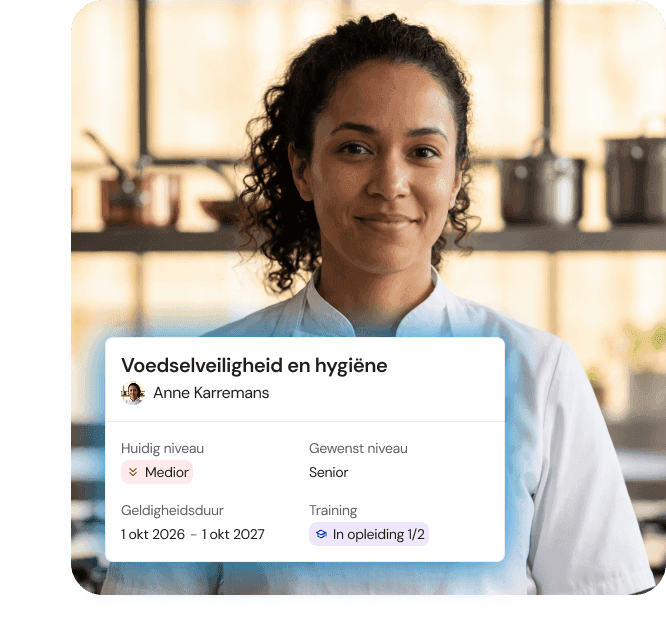
Where Performance Management gives insight into performance and behavior, Skills Management shows which skills, certificates and levels are present within the organization. Dyflexis gives real-time insight into skills within teams, so you see faster who is qualified for what and where shortages arise.
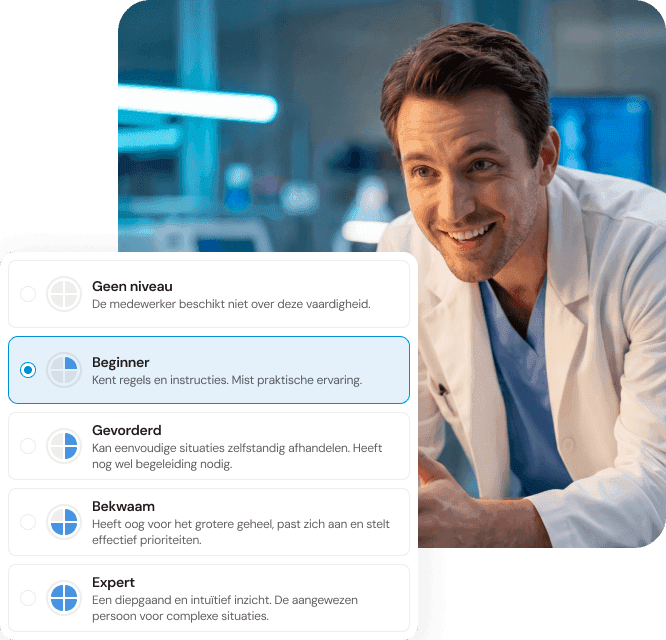
That's important, because many organizations know who is available, but know less well who has which skills. Especially with growth, multiple locations or changing teams, that information quickly becomes fragmented. Skills Management makes implicit knowledge explicit. You see which skills are present, at what level employees master them and how that compares to what the organization needs.
That makes skill gaps concrete. For example, you discover that a certain task can only be done by a limited number of employees. Or that a certificate will soon need extra attention. You can then decide in a targeted way what's needed: attracting new talent, training current employees or putting teams together more smartly.
Skills Management also makes development more practical. Instead of broad development plans, it becomes clear which skills someone already masters and which can still be developed. That gives employees more direction, lets managers guide in a more targeted way and makes growth part of daily work.
Talent management is ultimately about better choices. Who do you want to keep? Who do you want to challenge? Which employees can grow? Which skills are missing? And what do you as an organization need to invest in today to be stronger tomorrow?
With Performance Management and Skills Management, Dyflexis brings those questions back to everyday practice. You get insight into performance, behavior, skills and skill gaps. That way, you can not only recognize talent, but also develop it in a targeted way and deploy it better.
That makes talent management not a separate HR project, but a fixed part of how you make teams stronger, help employees grow and prepare the organization for the future.
From insight to targeted growth


Discover the power of Dyflexis
Pick a time that works for you.
Free and without obligation, read how we handle your data in our privacy policy.


